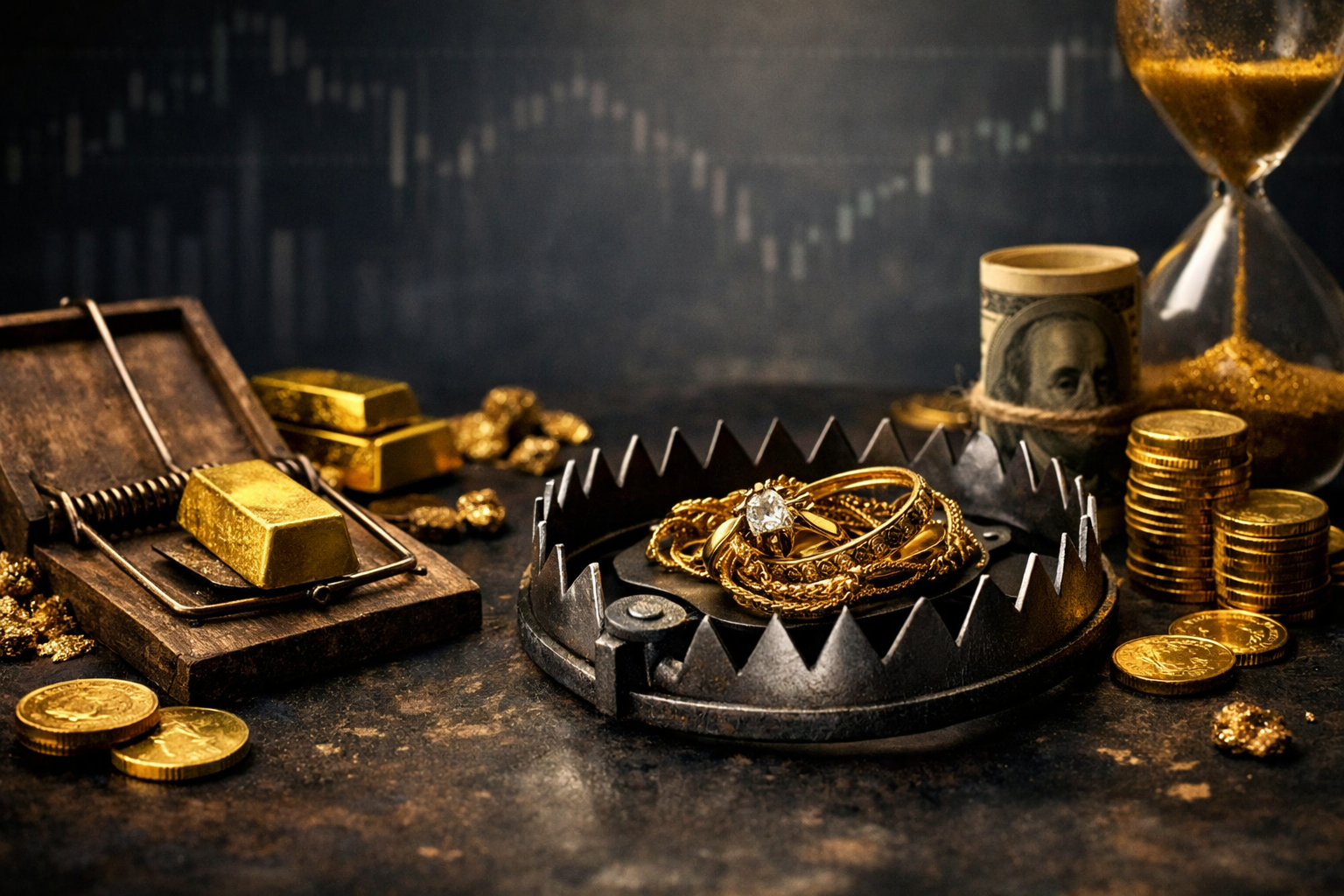
Economic Storm Ahead: Why Gold Is the Only Asset Standing

The global economy is facing serious challenges. Rising inflation, political uncertainty, and fluctuating markets are causing worry among investors and everyday people alike.
Many fear losing the value of their savings and investments. In these uncertain times, people look for safe ways to protect their money.
One asset that has consistently stood the test of time is gold. This article explores why gold is one of the strongest and safest assets during an economic storm.
Understanding the Economic Storm
When the economy suffers from difficulties or slowdowns, it is said to be experiencing an “economic storm.” Economic storms are characterized by high unemployment levels, poor business growth, inflation, and/or financial crises.
For example, when the economy is facing problems, we see many businesses beginning to fail as their profits decrease and their number of employees increases. In addition to these problems, we also understand how quickly the price of money can drop.
This loss of confidence in money, and therefore in banks and stock markets, results in a loss of faith in money as an investment. That is why so many investors turn toward alternative investments such as gold, which has shown itself to be a viable alternative during times of economic uncertainty.
Why People Lose Trust in Traditional Investments
People frequently experience anxiety about their economic future during times of crisis, as financial institutions tend to provide relatively low rates for savings accounts, which makes it challenging to accumulate wealth without taking on the risk associated with investment products. Investments such as equities are typically associated with wealth building; however, due to the volatility in stock market prices, it is possible to lose value very rapidly.
Real estate is a stable form of investment; however, with economic conditions impacting the real estate market, there may be uncertainty regarding how much home prices will appreciate.
People tend to seek safe investment classes when traditional investments are perceived as becoming increasingly risky; gold has historically been one of the safest forms of investment because it has been commonly accepted and has maintained its worth throughout history.
Gold as a Timeless Store of Value
For millennia, gold has symbolized, in every society, affluence and wealth. The primary purpose of gold was as currency; today, gold is not utilized by most people to purchase everyday items but remains a globally important asset.
Conversely, paper currencies lack the attributes of scarcity; governments have the capability to produce, “print,” as much of it as they see necessary.
When governments produce an excess amount of paper currency, the end result typically results in inflation; ultimately the paper becomes worth less. Because there are limited amounts of gold available, the limitation serves as insurance against the declining value of paper.
How Gold Protects Against Inflation
When a country has high inflation, then it means that many things will not be affordable anymore, as their value has gone up tremendously compared to last year.
So if you had $100 a year ago with 10% inflation, those same $100 will buy you less than what they would buy you today. People who save money in cash or savings accounts are very concerned about this because it means that their savings will become less valuable.
Gold is usually a good way to hedge against inflation since gold usually increases in price, unlike money, which loses value during times of high inflation. By buying gold, individuals can safeguard and grow their wealth while maintaining their purchasing power during periods of high inflation.
Gold Compared to Stocks and Bonds
Bonds and stocks are two well-known investment avenues. The stock represents an investor’s share of ownership in a corporation, while the bond represents a loan to a corporation or government. Both stocks and bonds generally provide strong investment returns during times of stable economic growth.
However, during periods of economic uncertainty (recessions), stocks will typically experience sharp declines in price. Bonds will typically lose value as well if interest rates rise.
Gold, on the other hand, does not derive its value from company profits or interest rates but rather is based on the overall global demand for it and the limited amount of gold that exists in the world. As such, investing in gold is usually a safer choice when markets are in a state of decline or instability.
Gold as a Safe Haven During Global Uncertainty
Market fear can arise from events like wars, political unrest, and trade disputes. Investors therefore look to invest in assets that offer them a sense of security or safety; an example would be “safe havens,” defined as investments that retain their value during times of stress on the market.
Traditionally, gold has been viewed as one of the safest havens to hold onto, and over time investors have gravitated towards its price when markets fall, as they have confidence in its ability to maintain value, therefore causing an increase in the price of gold.
Gold and Currency Weakness
The weakening of a nation’s currency creates immediate effects on people in that nation. They will find that the amount of currency they have available to spend to purchase goods both locally and internationally has become diminished. A way for people to preserve their wealth when their currency is devalued is to invest in gold. In fact, many governments maintain large quantities of gold reserves as support against their own currency value.
The governmental trust placed in gold by all countries is indicative of the importance of gold as a form of currency stability. As such, when the value of paper money declines, the value of gold as an investment increases relative to the currency, making it a viable and sound choice for those who wish to seek stability with their finances.
Ways to Invest in Gold
There are multiple ways for individuals to invest in gold. Investors can buy gold in its physical form (coins and bars) and have such items as tangible assets to hold as opposed to just owning a piece of paper. Jewelry is another way to hold wealth and represents both cultural and financial wealth as well.
Other options for the investor include modern-day vehicles for holding gold without having to physically hold the gold, such as gold exchange-traded funds (ETFs) and gold mining stocks (companies that find gold). Each method has its own advantages and disadvantages.
Physical gold allows you the benefit of owning a tangible asset, whereas financial vehicles for gold allow you to quickly and easily trade (buy/sell) gold in the marketplace. Therefore, your investment goal, how much money you have available to invest, and what type of investment strategy you are using will all dictate which type of vehicle would fit you best for investing in gold.
Risks to Consider
Although gold is a stable investment vehicle, it does have some level of volatility. As with all commodities in an ever-changing economy, their value can change quickly, depending upon current market behavior. The investor must be aware of the potential for fluctuations in prices in the near future as well as the long-term potential for an increase or decrease in the overall value of their investment. Gold is not similar to traditional equity or debt securities.
Investors in gold do not receive income from holding their investments; therefore, before making a decision regarding buying and/or selling gold investments, the investor needs to evaluate their objectives as a long-term saving strategy for building a portfolio of wealth, instead of seeking immediate returns from short-term gains.
Why Gold Remains Strong
Gold is perceived as a stable investment even in challenging economic conditions for many different reasons. Gold is viewed as a store of value and a “safe haven” during times of economic uncertainty. Additionally, gold will provide protection against inflation. The increasing global demand for gold and its limited availability contribute to its value as an investment. Historically, gold has provided investors with confidence during times when other investments have not performed well. Therefore, gold provides a measure of security and peace of mind to many investors.
Lessons from History
Gold has many historical examples of strength. In the 2008 financial crisis, gold had more value when banks and stock markets were struggling. With a dramatic decrease in confidence in standard assets, many investors chose to invest in gold. Gold has been utilized as currency, jewelry, and a means to display wealth for thousands of years and remains an important asset in the global economy for maintaining both monetary and asset values.
How Much Gold Should You Hold?
Experts recommend holding a portion of your investment portfolio in gold. This can range from 5% to 15% depending on your risk tolerance. Balancing growth assets like stocks with safe assets like gold can help protect your overall wealth. While stocks can provide higher returns during normal times, gold can soften the blow during economic storms. This balance creates stability in uncertain times.
Conclusion
An economic storm brings fear, uncertainty, and a loss of trust in money and markets. Gold stands out as a reliable asset that protects wealth and retains value over time. It offers protection against inflation, currency weakness, and market fluctuations. While no investment is entirely risk-free, gold’s long history of strength makes it a preferred choice for investors seeking security.
CKS Gold Diamonds LLC Dubai is a trusted leader in the gold and diamond industry. We provide high-quality gold bars, coins, and elegant diamond jewelry that combine beauty with lasting value. For those looking to secure their wealth and invest in trusted gold assets, CKS Gold Diamonds LLC Dubai offers unmatched quality and reliability.