


The Gold Trap: What First-Time Buyers Get Wrong Every Time
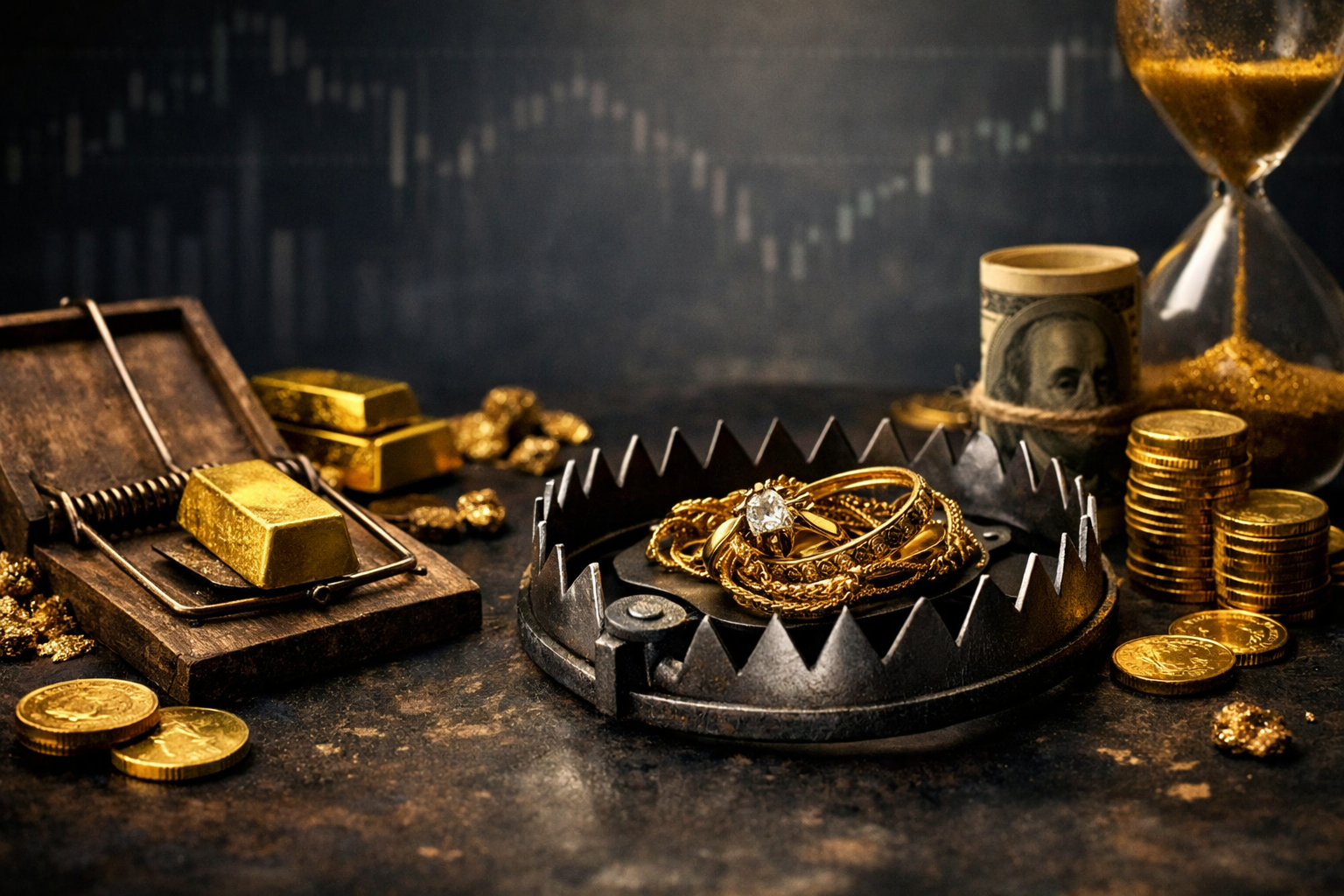
Unbelievably, gold has an impact on people everywhere. Gold is more than just a metal. It is a feeling, a custom, a status symbol, a safety feature, and more! Additionally, a lot of first-time purchasers believe that purchasing gold is the most prudent financial choice. On the other hand, novices occasionally lose money covertly while paying closer attention. Don’t think investing in gold is a bad idea, but our expectations are frequently misplaced. It seems like a trap at times, don’t you think? Let’s address why it seems like a trap based on a few errors that experts have seen people make:
Considering Gold Is a Surefire Way to Make Money
You may need to reconsider your analysis if you believe that gold equals to high profit. Beginners who want to invest in gold think that the price of the metal only increases and never decreases. They assume it’s a one-way street the moment they read headlines about record highs. The catch is that gold investments move in cycles, unlike savings accounts. Gold prices can stagnate or even decline in certain situations, as history has demonstrated. Thinking of it as a miracle wealth multiplier is the biggest error. Gold is, in all honesty, a store of value. The best suggestion is to never buy during emotional highs like wedding rush, festive season or potential price spike due to sensational news.
Disregarding the Hidden Expenses
When you purchase a lovely gold necklace or ring, you are squandering money on pointless items rather than investing in pure gold. What about the design premium, waste, manufacturing costs, GST, etc.? This is the harsh reality to face. The resale value is already less than what you paid when you leave the store. Many first-time, enthusiastic purchasers fail to consider how their hard-earned money is lost on craftsmanship rather than pure gold weight. Always remember that jewellery is an emotional asset rather than a wise financial investment.
Mistaking Investments for Jewellery
Tradition frequently obscures reason for many gullible consumers. “Gold is the safest investment,” their relatives tell them. Traditional families associate gold with jewellery, which is the least effective way to possess gold as an asset. Before making a choice, one must take into account a number of financial factors, such as high production costs, resale deductions, emotional attachment that keeps one from selling when necessary, etc. Purchasing coins, bars, ETFs, or sovereign gold bonds is the most effective way to invest in gold. In actuality, these real-time assets behave quite differently from bridal sets that are kept in a locker. Whether you want a memory or an asset, make an informed decision!
Purchasing Out of Fear of an Uncertain Future
Buying gold during a financial crisis is the most common error people make. However, they are unaware that fear buying will only cause them to forfeit their possible profit. When gold prices are at their peak, many first-time buyers purchase it in anticipation of further price increases. The trap? The cost of gold is increasing! By booking their profits, astute buyers get out of the market by investing in gold. Recall that investing in gold should never be a hasty decision, but rather a planned allocation.
Investing Too Much in Gold
We are aware that investing in gold feels secure, but why go overboard? Why put all of your eggs in one basket? Many novices overlook diversification in favour of investing a sizable portion of their savings in gold. They never look into the fact that gold doesn’t grow like businesses or equity, nor does it produce income or pay interest like FDs. It is not the best method for actively accumulating wealth, but it is a means of safeguarding it. An astute investor is aware of the benefits of a well-rounded diversification strategy. They are aware that an excess of gold can impede economic expansion. Therefore, only set aside a specific portion of your savings for this.

